A hedge trimmer makes quick work of a job that would take all afternoon with hand shears — but speed is exactly the problem. It’s just as fast at ruining the shape of a hedge as it is at improving it, and most of the sad, bare-bottomed, lopsided hedges you see are the result of someone enthusiastically waving a powered trimmer around with no plan. The good news is that a tidy, healthy hedge comes down to three things: cutting at the right time of year, shaping it correctly, and handling the tool properly. None of it is hard once you know what you’re aiming for.
When to trim hedges
Most established hedges want trimming during the growing season, once the soft spring flush has firmed up — late spring through summer for the main work. Formal evergreen hedges that you want crisp (boxwood, privet, yew) benefit from two or three light trims across the season rather than one big chop: a tidy in late spring, again in mid-summer, and a final light pass in early autumn to carry the shape through winter.
A few timing rules worth keeping straight:
Flowering hedges bloom on old wood — forsythia, lilac, weigela. Trim them right after the flowers fade, not before, or you’ll cut off next season’s display.
Don’t hard-trim late in autumn in cold regions. A late cut pushes tender new growth that the first frost kills, weakening the hedge going into winter.
Check for nesting birds before you start, especially in spring and early summer. Active nests are legally protected in many places — the Migratory Bird Treaty Act in the US, the Wildlife and Countryside Act in the UK — and beyond the law, it’s worth waiting a couple of weeks for a brood to fledge before you trim that section.
How to trim hedges so they actually stay healthy
Here is the single most important idea on this page, and the one most people get backwards: keep the hedge wider at the bottom than at the top. This gentle taper — pros call it “batter” — lets sunlight reach the lower branches. Trim a hedge with straight sides, or worse, wider at the top, and the shaded base slowly goes bare and twiggy until you’ve got a green lollipop on bare legs that no amount of trimming will fix.
The one rule that keeps a hedge green to the ground: cut it wider at the base than the top.
With that shape in mind, the method:
Do the sides before the top. Work each side from the bottom upward, following the batter so the face leans in slightly as it rises.
Save the top for last, and for a formal flat top, run a taut string line between two stakes at your target height and cut to it — freehand “level” almost never is.
Step back often. Trimmers cut faster than your eye corrects, so check the line every few feet rather than at the end when it’s too late.
For rounded or curved shapes, work in smooth passes and let the curve guide you, stepping back frequently; you’re shaving, not carving.
The same batter-and-string principles apply whether you’re shaping a crisp formal hedge or just tidying an informal one — they’re how you get straight, even results instead of scalloped ones.
How to use a hedge trimmer safely
Powered blades deserve respect, and good technique is also safer technique:
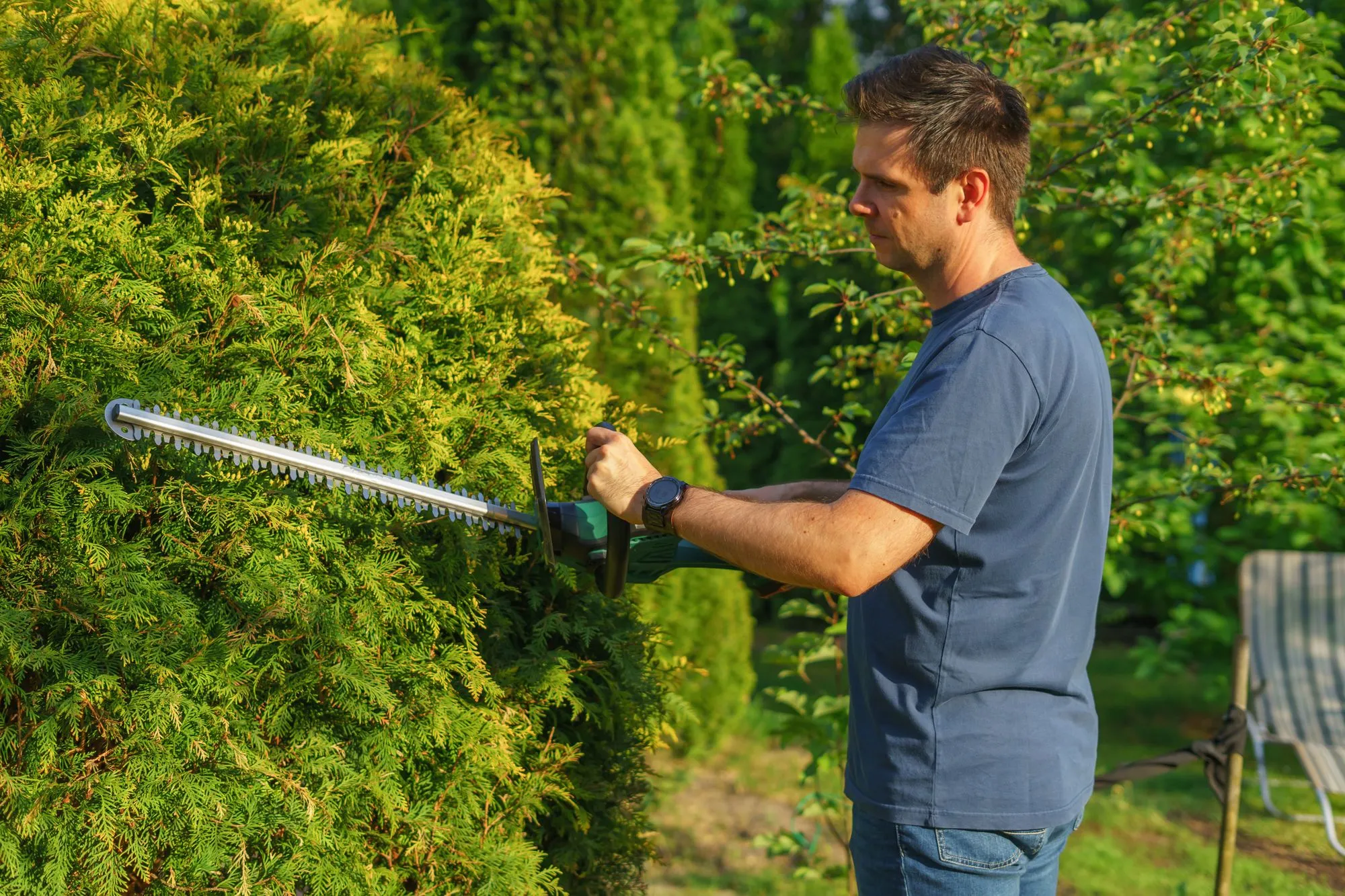
Both hands on the tool, always. Hedge trimmers are built for two-handed use; never operate one one-handed or above shoulder height where you can’t control it.
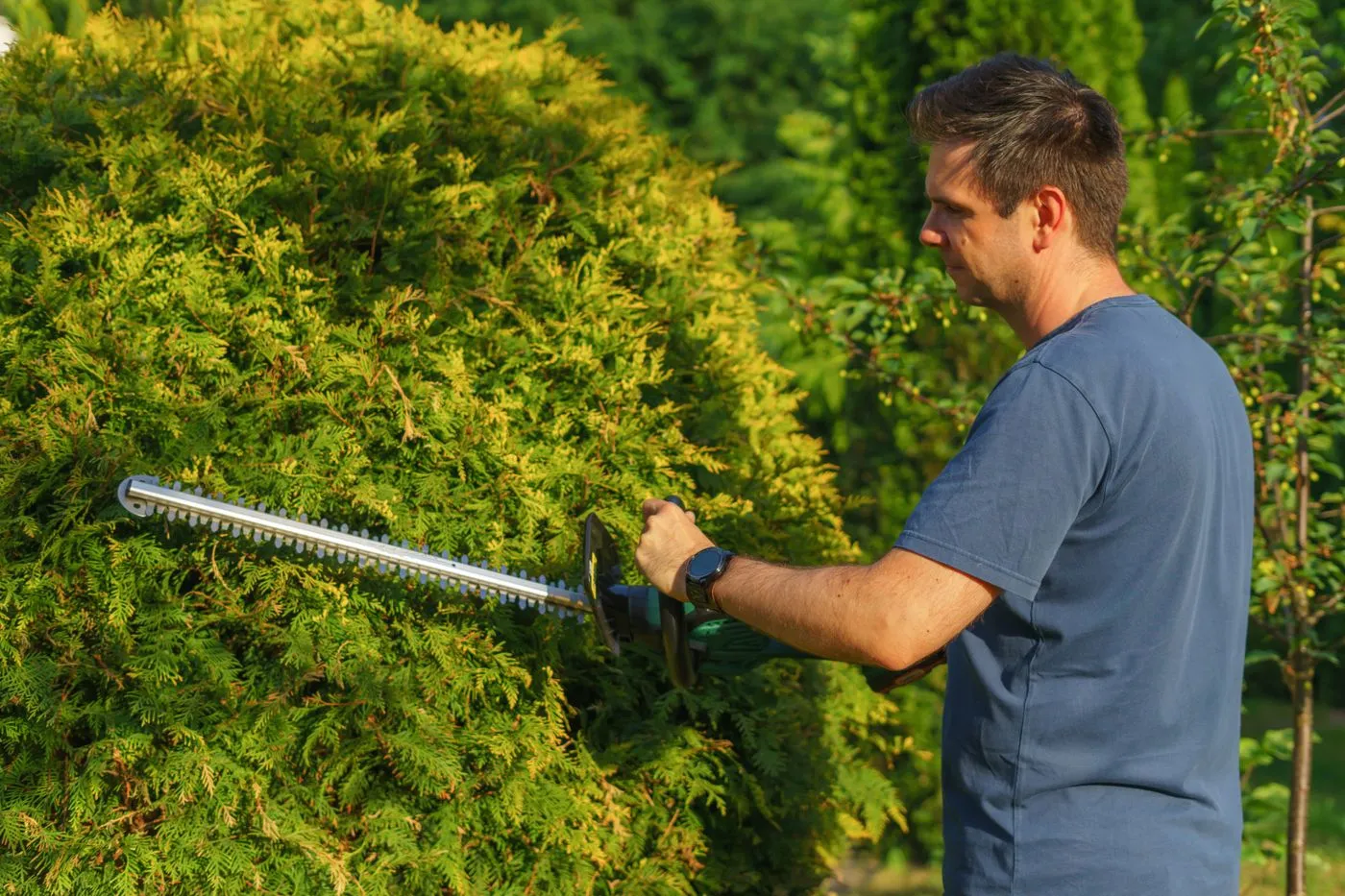
Let the blade do the work. Hold it at a slight angle to the hedge face and sweep in a smooth, scything arc — upward strokes on the sides, flat side-to-side passes on top. Forcing it through branches thicker than its rated capacity just jams and dulls it; switch to loppers for anything too thick.
Mind the cord or battery. With a corded trimmer, drape the lead over your shoulder and keep it behind you so you’re never cutting toward it. With cordless, you’ve one less hazard to track — one of the quiet reasons they’ve taken over.
Wear eye protection and gloves, sturdy shoes, and ear protection for louder gas models. Keep firm footing, and never overreach off a ladder — use a long-reach pole trimmer for height instead.
Reviving an overgrown hedge
An overgrown hedge can usually be brought back, but not in one go. The rule is to cut back no more than about a third in a single season, spreading a severe renovation over two or three years so the plant can recover and refoliate between cuts.
Timing and species matter here. Renovate deciduous hedges (hornbeam, beech, privet) in late winter while they’re dormant. And know your plant before you cut hard into old wood: yew, hornbeam, beech, privet, and most broadleaf hedges resprout reliably from bare wood — but most conifers (pine, spruce, many cypress) do not, so cutting them back to bare brown growth leaves a permanent hole. When in doubt, taper gradually rather than gambling on a hard cut.
How to choose a hedge trimmer
You don’t need the most powerful trimmer on the shelf — you need the one that matches your hedges. The three types, briefly:
Corded electric is the cheapest (often $40–60), lightest, and runs as long as it’s plugged in — but you’re tethered to an outdoor outlet and an extension cord. Ideal for small to medium hedges near the house.
Cordless / battery is where most homeowners land now. Modern models deliver near-gas power with no cord and 45–90 minutes of runtime, at a higher price. If you already own tools from a battery brand, staying in that ecosystem saves buying more batteries.
Gas gives the most power for large properties and professional use, but it’s heavy, loud, and needs fuel and maintenance — overkill for the average yard.
Beyond type, three things matter: blade length (18–22 inches for small or ornamental hedges, 24 inches and up for tall privacy hedges — longer cuts faster but weighs more), weight (the biggest driver of arm fatigue, since you’ll often hold it at height — go as light as the power lets you), and safety features like a two-hand trigger, blade guard, and a brake that stops the blade fast when you release.
Affiliate disclosure: We independently test and pick what we
recommend. If you buy through links on this page we may earn a commission — at no extra
cost to you. Learn more.
Budget pick · corded
BLACK+DECKER BEHTS300 Corded Hedge Trimmer
20-inch dual-action hardened-steel blade, 3.8-amp corded motor, saw-tooth tip cuts branches to ~1.5 in., ~5 lb, full wrap-around handle, cord retainer
If your hedges are within an extension cord's reach of an outlet, it's hard to justify spending more. It's light, it's simple, the dual-action blade keeps vibration down, and the saw-tooth tip handles the occasional thick branch most corded trimmers choke on. Limited only by the cord — which for a small or medium hedge near the house isn't much of a limit at all.
56V brushless motor, 24-inch dual-action blades, 1 in. cut capacity, ~3,000 strokes/min, includes 2.5Ah battery + charger
The one most home gardeners should look at first. It's widely rated the benchmark cordless trimmer for homeowners — genuinely gas-like power that pushes through inch-thick branches, no cord to manage, and the 24-inch blade clears a privacy hedge quickly. It costs real money, but it's part of EGO's broader battery system, so the same pack runs their mowers and blowers. Buy it for a yard you'll be maintaining for years.
When is the best time to trim hedges? Late spring through summer for most established hedges, once the spring growth has firmed up. Crisp formal hedges benefit from two or three light trims across the season; flowering hedges get cut right after they bloom.
How do I keep my hedge from going bare at the bottom? Trim it wider at the base than the top (the “batter” taper) so sunlight reaches the lower branches. Straight or top-heavy sides shade the base and cause the bare, leggy look.
How do I cut a hedge straight? Run a taut string line between two stakes at your target height for the top, do the sides bottom-to-top first, and step back frequently to check the line.
Can I cut back an overgrown hedge hard? Only by about a third per season, spread over two or three years — and only on species that resprout from old wood (yew, beech, hornbeam, privet). Most conifers won’t regrow from bare wood.
Corded, cordless, or gas? Corded for small hedges near an outlet and the lowest price; cordless for the best all-round homeowner balance; gas only for large properties or professional use.
See also our guide to pruning roses — the other half of keeping a garden in shape.
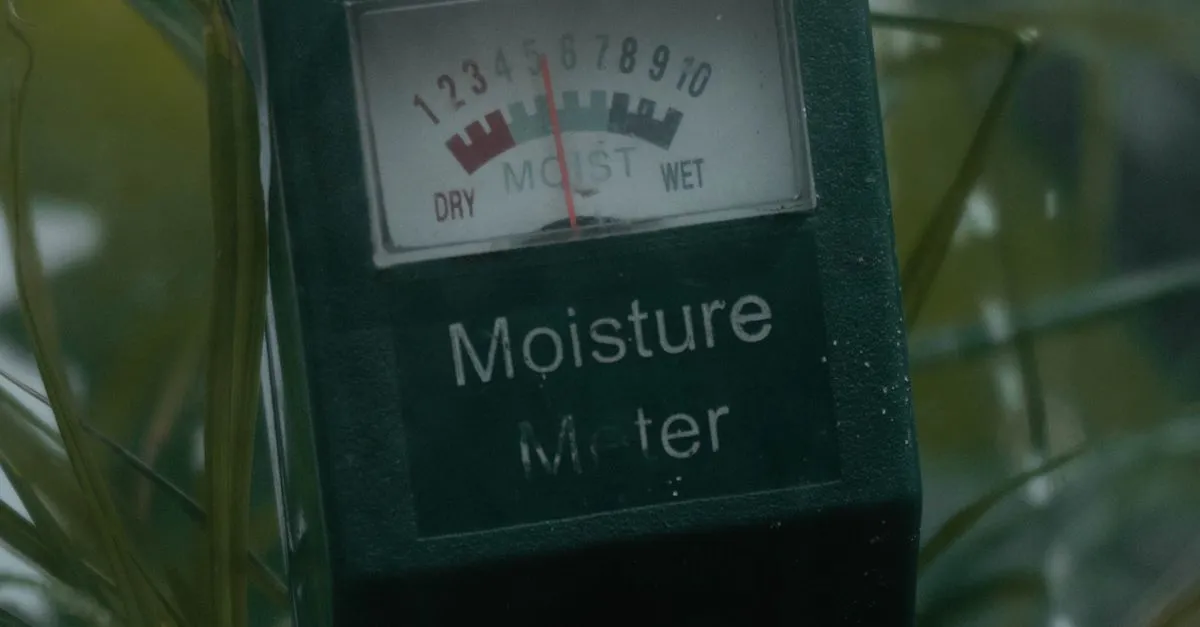
Your soil moisture meter reads 1–10, not wood-moisture percent. See what each number means, the right number to water at for each plant, and why it misreads.