Gardening Tips
How to Trim Hedges: When, How, and What to Use
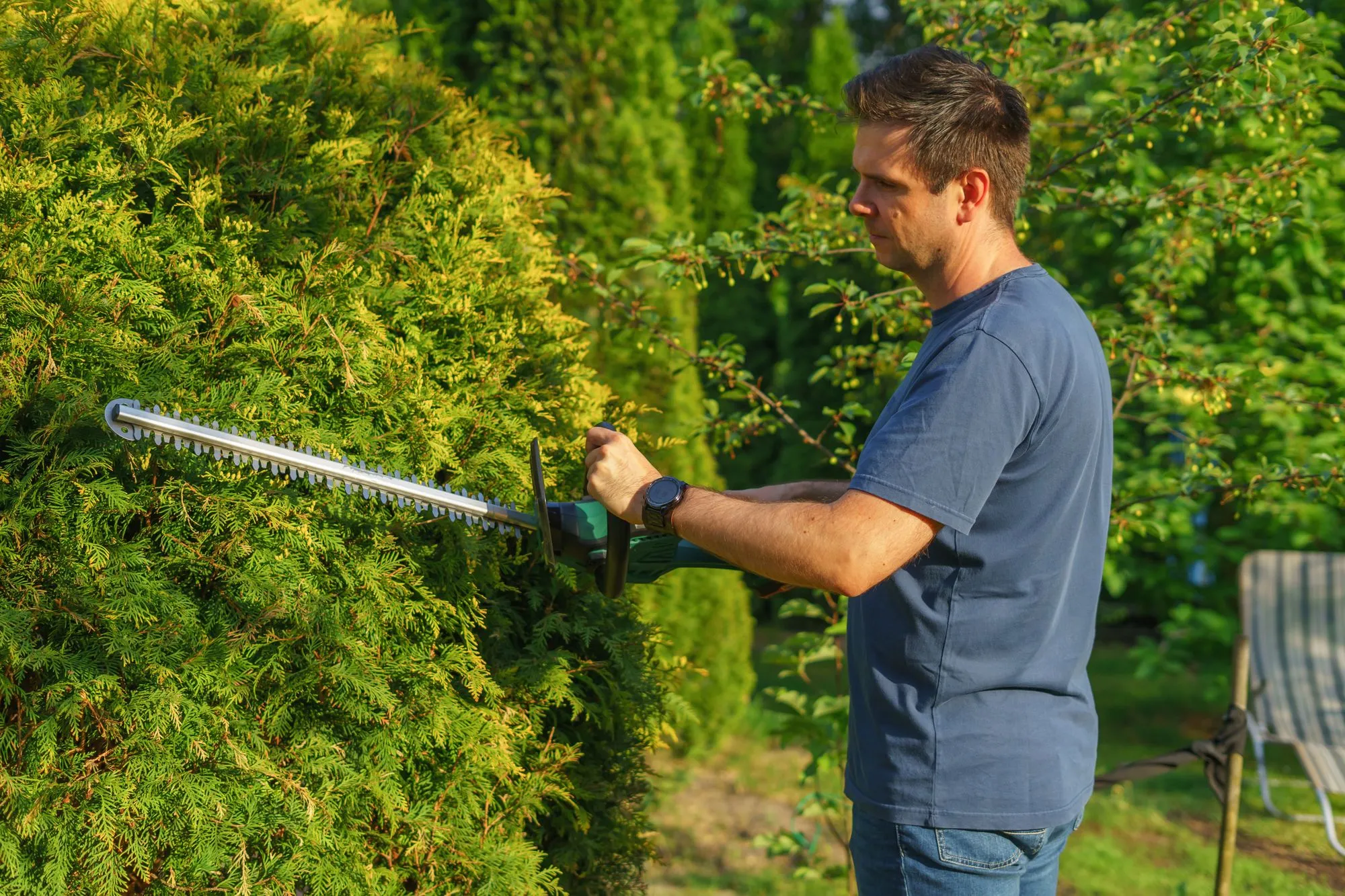
When to trim hedges, how to shape them so the base stays green, and how to use a trimmer safely — plus how to choose the right one.

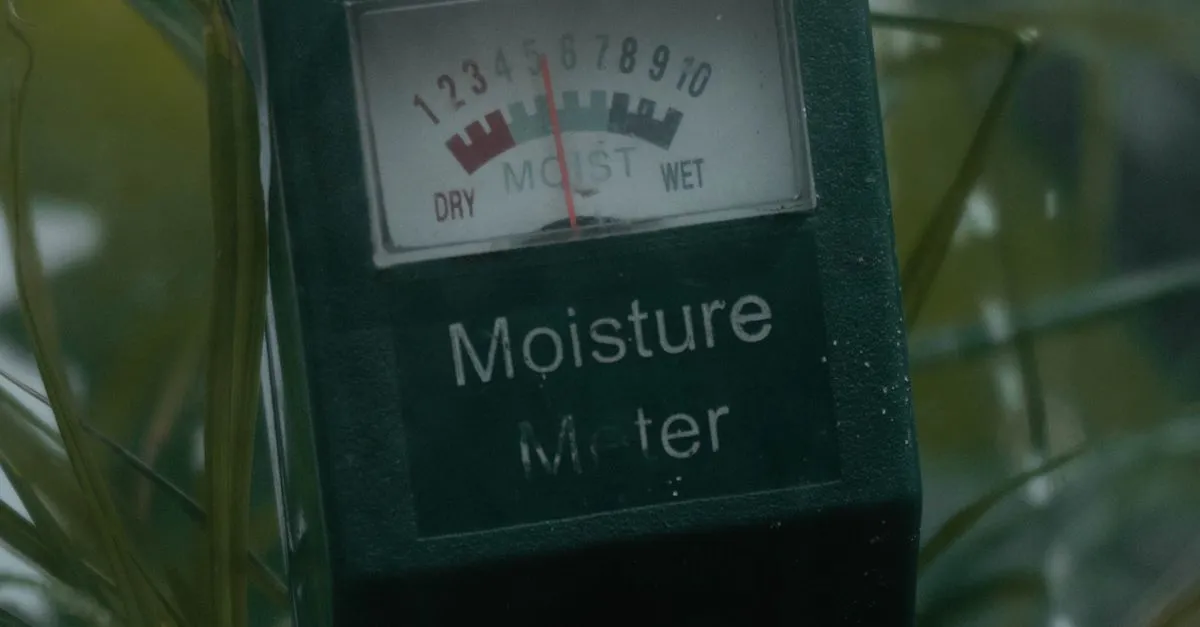
You pushed the probe into the pot, the needle swung to 8, and now you’re standing there holding a watering can you’re no longer sure you should use. The top inch of soil looks like cracked desert. The meter says swimming pool. Welcome to the most confusing two seconds in houseplant care.
Here’s the good news: a soil moisture meter is one of the few gardening gadgets actually worth its eight dollars — once you know how to read the thing. The bad news is that nearly every guide you’ll find online was written for someone testing a floor joist or a stack of kiln-dried lumber, not someone trying to keep a fiddle leaf fig from dropping its leaves out of spite. This one is for the plant people.
The probe you own — single dial, a scale running 1 to 10, almost certainly an XLUX or one of its dozen unbranded twins — doesn’t measure water. It measures how easily a tiny electrical current passes between the metal probe and the soil packed around it. Wet soil conducts well and swings the needle high. Dry soil barely conducts and leaves it low. Everything the meter tells you is really a conductivity reading wearing a costume.
Two facts fall out of that, and between them they explain almost every strange reading you’ll ever get — but hold that thought, because it’s the whole reason the “why your meter lies” section near the bottom exists.
One bit of trivia that genuinely surprises people first time they hear it: most of these meters have no battery, and never will. There’s nowhere to put one. The probe generates its own faint current from the two different metals reacting in damp soil, which is also why a meter left to corrode in a pot slowly turns useless.
And if you arrived here after searching “how to read a moisture meter” and half the internet handed you drywall percentages and lumber-drying charts — that’s a different tool entirely. Soil meters speak in 1 to 10. Wood and building meters speak in moisture-content percentages. Don’t try to translate between the two scales; they aren’t the same language and were never meant to be.
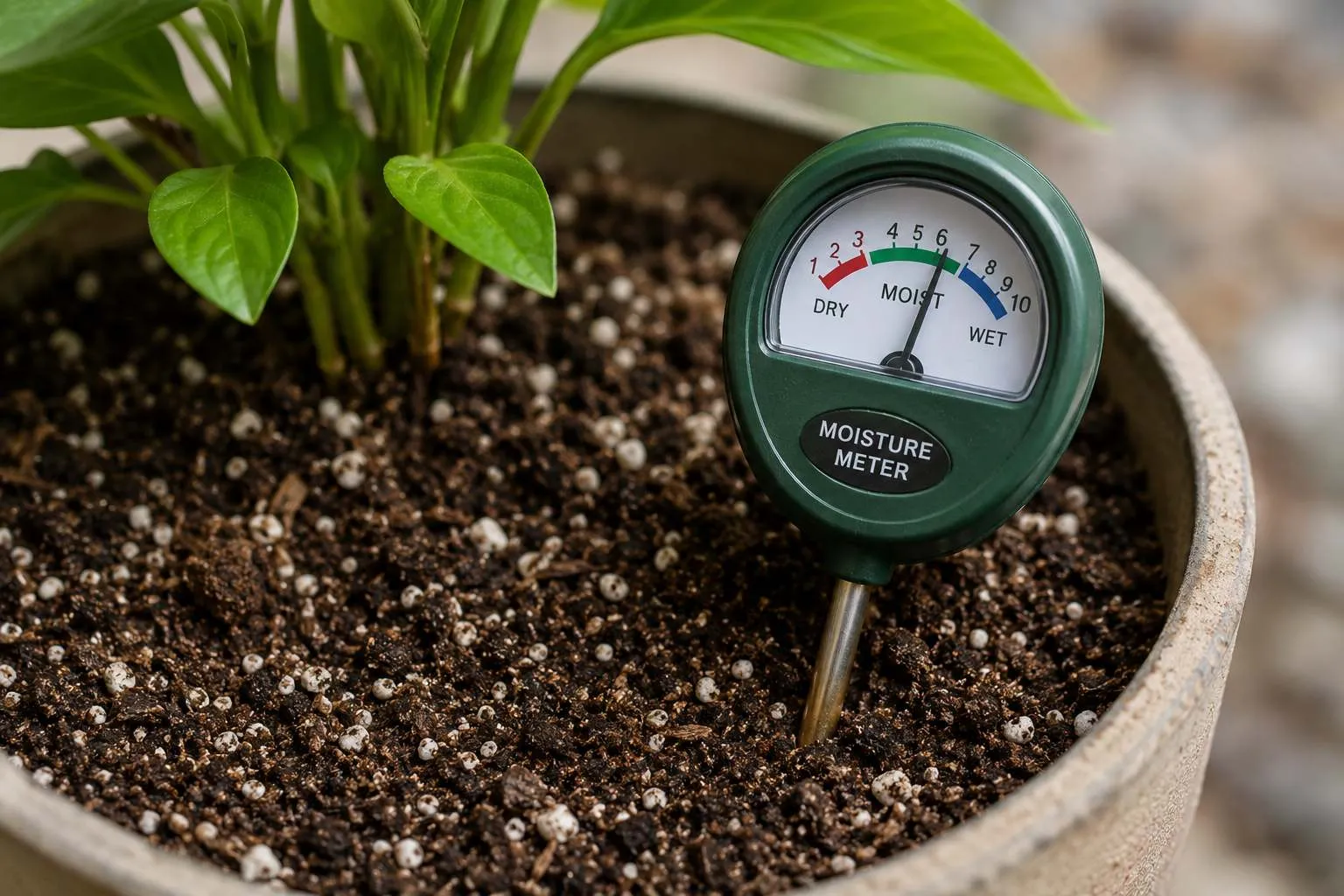
Most soil meters split the dial into three colour-coded zones, and the colours quietly do most of the work:
The trap is reading those zones as universal commands. “Green is good” is only true for some plants. A cactus parked at 6 is a cactus quietly rotting; a fern that hits 2 is a fern you’ll be apologising to for a week. The number is information, not an instruction — what you do with it depends entirely on what’s growing in the pot, which is the next section.
The meter is honest. Most bad readings come from how it’s used, so a few seconds of technique buys you a lot of accuracy.
Push the probe in slowly, down to roughly two-thirds the depth of the pot. You want it in the root zone, not the topsoil — the top inch dries out first and fastest, so a shallow reading will cheerfully tell you the pot is dry while the roots are sitting in damp soil. That single mistake is responsible for an enormous amount of accidental overwatering.
Then wait. Give the needle a solid 30 to 60 seconds to settle instead of trusting its first nervous twitch. Take readings in two or three spots around the pot, not jammed against the side wall and not skewered through a root or a chunk of bark, both of which throw nonsense.
When you’re done, pull the probe out and wipe it dry. Do not leave it standing in the soil between waterings like a little flag. It corrodes, the readings drift, and a few weeks later you’ll swear your reliable meter has started lying to you — when really it’s just rusting.
This is where the colour zones stop being one-size-fits-all and the meter actually earns its keep. Match the reading to the plant, not to the colour:
If you grow without soil at all, the meter logic doesn’t transfer — watering is a different game entirely (more on that in how often to water hydroponic plants).
Once a meter starts giving readings that don’t match reality, it’s almost always one of these — and none of them mean the meter is broken.
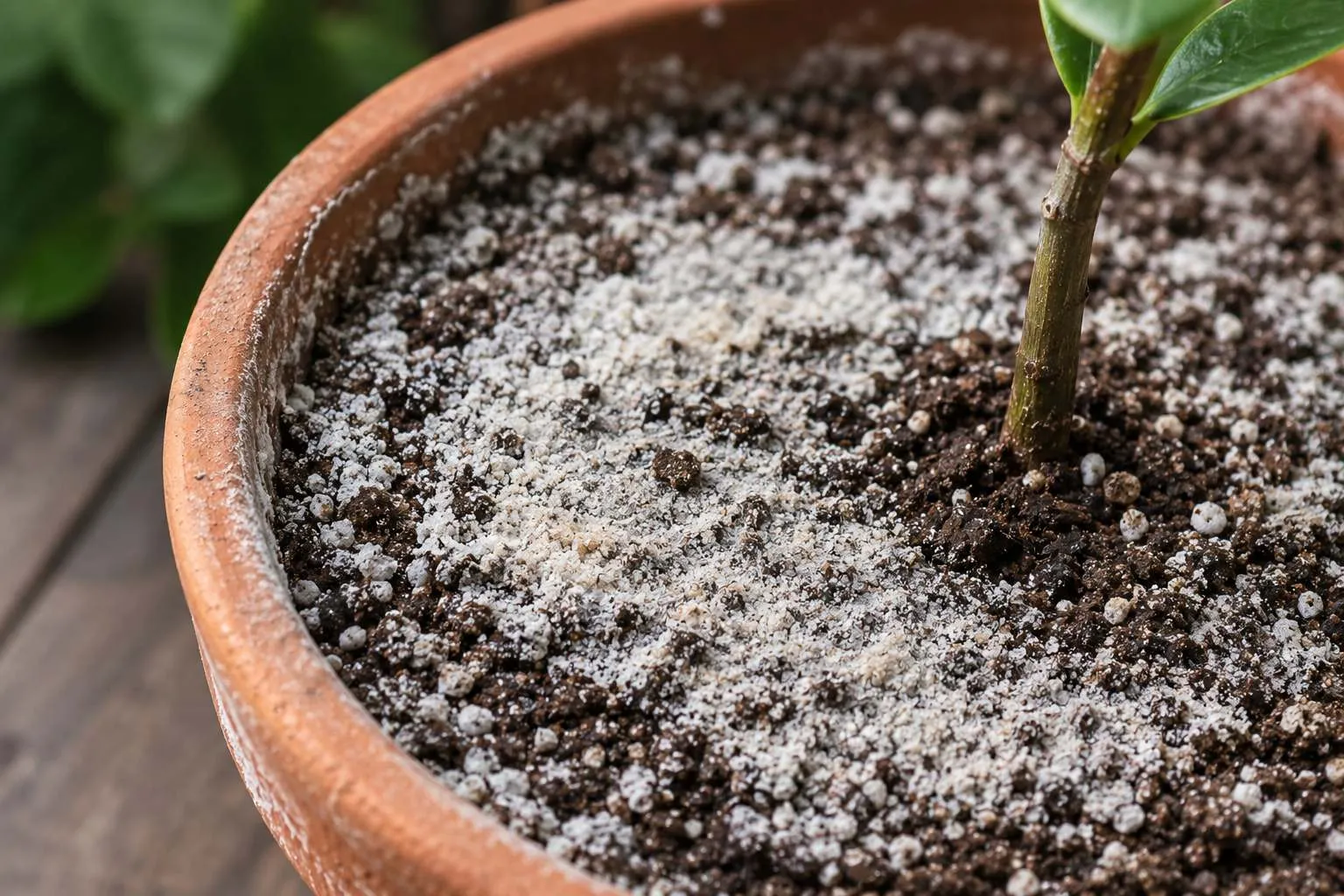
It always reads “wet,” but the plant looks thirsty. Usually salt buildup from fertilizer. Dissolved fertilizer salts are excellent conductors, so a pot that’s been fed heavily reads wetter than it is — the meter is picking up salts, not water. The fix is to flush the pot with plain water until it runs clear from the drainage holes.
The needle jumps around in chunky mix. Aroid and orchid blends full of bark and perlite are mostly air pockets, and the probe reads air as “dry.” Take more readings and trust the average, not any single twitchy one.
It reads low in coir or peat, even when the mix is damp. Coconut coir and peat-heavy blends hold a lot of water but conduct it differently than garden soil, so the needle tends to sit a whole zone lower than the mix actually is. If you’ve just repotted into a fluffy coir or peat mix and the meter suddenly insists everything’s dry while the plant looks perfectly happy, trust the plant — and give it a few waterings to learn how your particular mix reads.
It says dry, but the roots are clearly wet. Classic shallow-probe error — you measured the topsoil, which always dries first. Push deeper, into the root zone, and read again before you water.
Brand-new, bone-dry soil reads oddly. Very dry, compacted, or hydrophobic soil makes poor contact with the probe, so a freshly-repotted dry pot can give a flat or erratic low reading until it’s been watered once and the soil settles around the probe.
When a reading genuinely doesn’t add up, spend ten seconds settling whether it’s the meter or the soil that’s lying. Hold the dry probe in the air — it should sit right down at 1. Dip it into a glass of plain tap water — it should swing up to 9 or 10. If it does both, the meter is fine and the soil is the real story, so go back and read deeper or check for salt. If it reads a confident 5 in mid-air, or refuses to budge in water, the probe is corroded or finished, and nothing it tells you is worth acting on. A meter that fails this test isn’t worth babying — they’re eight dollars, replace it.
How do you read a soil moisture meter? Insert the probe two-thirds deep into the root zone, wait 30–60 seconds for the needle to settle, and read the 1–10 scale: 1–3 is dry, 4–7 moist, 8–10 wet. Then water based on the plant, not the colour.
What number means the soil is “moist”? Anything in the 4–7 band. For most houseplants you actually want to water before it climbs back up there — around 3–4 — rather than keeping it permanently soggy.
Why does my moisture meter always read wet? Most often fertilizer salt buildup inflating the conductivity reading; flush the soil with plain water. Failing that, the probe may be sitting in a genuinely waterlogged root zone — which is its own problem to fix.
Do soil moisture meters need batteries? The common analog probe types don’t — they generate their own current in damp soil. Only digital meters with a screen need a battery.
Can I leave the meter in the pot all the time? No. The probe corrodes in constant contact with soil, which kills accuracy. Read, wipe it dry, and store it out of the dirt.
Are the cheap ones accurate? Accurate enough for what matters — tracking whether a pot is trending wetter or drier over time. They’re not laboratory instruments, but for deciding “water today or wait,” a relative reading is all you need.
When to trim hedges, how to shape them so the base stays green, and how to use a trimmer safely — plus how to choose the right one.
This blog contains the basic information that you definitely need to know about the most common black worms on tomato plants.
All the basic things you need to know such as what are the best soil amendments for a vegetable garden is here in this blog.